Decks & porches
Cleaning ahead of staining or sealing, at a pressure that will not raise the grain or gouge softwood.
 7B Handyman& Contracting LLC
Decks, siding, driveways and fences cleaned properly — at a pressure the surface can actually take.
Pressure washing is the fastest visible improvement available to most properties, and the easiest way to permanently damage wood, siding and mortar if it is done with too much pressure and the wrong tip.
A long wet season and heavy tree cover mean surfaces here grow algae, moss and mildew quickly, particularly on north-facing walls and anything shaded. Left alone it holds moisture against the surface, which is a cosmetic problem on concrete and a durability problem on wood.
Cleaning ahead of staining or sealing, at a pressure that will not raise the grain or gouge softwood.
Removing algae, mildew and winter grime without driving water behind the cladding.
Concrete, pavers and hard surfaces, including the moss that makes shaded walkways slick.
Cleaning fence lines before re-staining, or just to get years of green off them.
Gutter faces and accessible surfaces cleaned as part of seasonal maintenance.
Surface cleaning ahead of exterior painting, which is most of whether the new finish sticks.
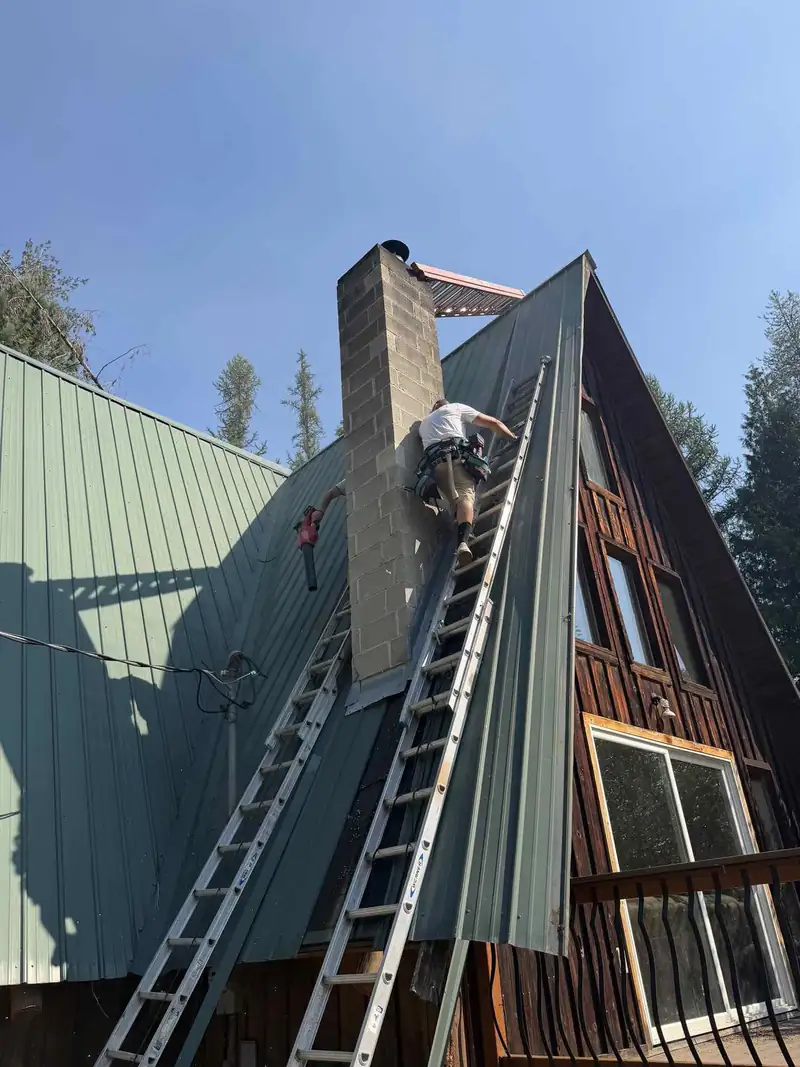
Actual 7B jobs, not stock photography.
The useful window here is late spring through early fall. Washing too late in the season means surfaces do not fully dry before the first freeze, and water sitting in wood or masonry through a freeze-thaw cycle causes exactly the damage you were trying to prevent.
Technique matters more than machine size. Softwood decking, cedar siding and older mortar all damage easily under high pressure — the giveaway is a fuzzy, furred surface or visible wand stripes that never go away. The right approach uses appropriate pressure, the right tip and distance, and cleaning solution to do the work the pressure should not.
If washing is prep for stain or paint, drying time is part of the schedule. Coating a surface that is still holding water is the most common reason a new finish fails within a season.
We look at the surfaces, the material and their condition, and flag anything too fragile for pressure.
Plants, fixtures and anything that should not get soaked gets covered.
Appropriate pressure and solution for each surface, rather than one setting for the whole property.
Even rinse, then a walk-through with you.
Pressure washing is quoted by surface area, surface type and condition. Estimates are free, and combining it with deck staining or exterior painting in the same visit is usually the better value.
Nick and his crew tackled a big job for us, pressure washing a steep-pitched roof on a 4000+ square foot house, plus graveling, landscaping and more. They did a fantastic job and came in under their bid. Thanks, Nick, Caleb, and Fisher!
Available in every community we serve — click through for local detail.
It can — softwood, cedar and older mortar are all easy to damage with too much pressure or the wrong tip. Done correctly it will not. The safeguard is matching pressure to the surface and using cleaning solution to do the work instead of brute force.
Late spring through early fall. You want enough warm, dry weather afterward for the surface to dry completely — especially if staining or painting follows, and especially before the first hard freeze.
Yes, and it is the right sequence. The deck has to be clean and fully dry first, so the wash and the coating are usually scheduled a few days apart depending on weather.
Call and describe the job, or send photos. Estimates are free and we will give you a real number rather than a range.