Rotten or damaged deck boards
Replacing failed decking, matched to the existing dock where possible.
 7B Handyman& Contracting LLC
Rotten boards, loose sections, failing handrails — fixed before someone gets hurt. And if your property has no road access, we come by boat.
A dock is the piece of a waterfront property that takes the most abuse and gets the least attention. It sits in water, freezes into ice, gets hit by wave action and storm debris, and then carries people — often barefoot, often carrying something, often children. Rotten boards and loose sections are not a cosmetic problem on a dock. They are the part of your property most likely to injure somebody.
7B Handyman repairs docks throughout the Lake Pend Oreille and Priest River area, and does the rest of the handyman and contracting work that waterfront properties need. If your property has no road access, that is not a problem — we have a work boat and we bring the tools to you.
Replacing failed decking, matched to the existing dock where possible.
Re-securing sections that have shifted, separated or come adrift over a season.
The parts people actually put their weight on — rebuilt and properly braced.
Repairs below the deck surface, where the real condition of a dock is decided.
Extending an existing dock rather than replacing it.
Repair after wind, wave or debris damage, including assessment for insurance purposes.
Corroded bolts, brackets, cleats and connectors replaced with hardware suited to constant water exposure.
Cleaning and re-sealing so the timber lasts, plus seasonal maintenance.
Actual 7B jobs, not stock photography.
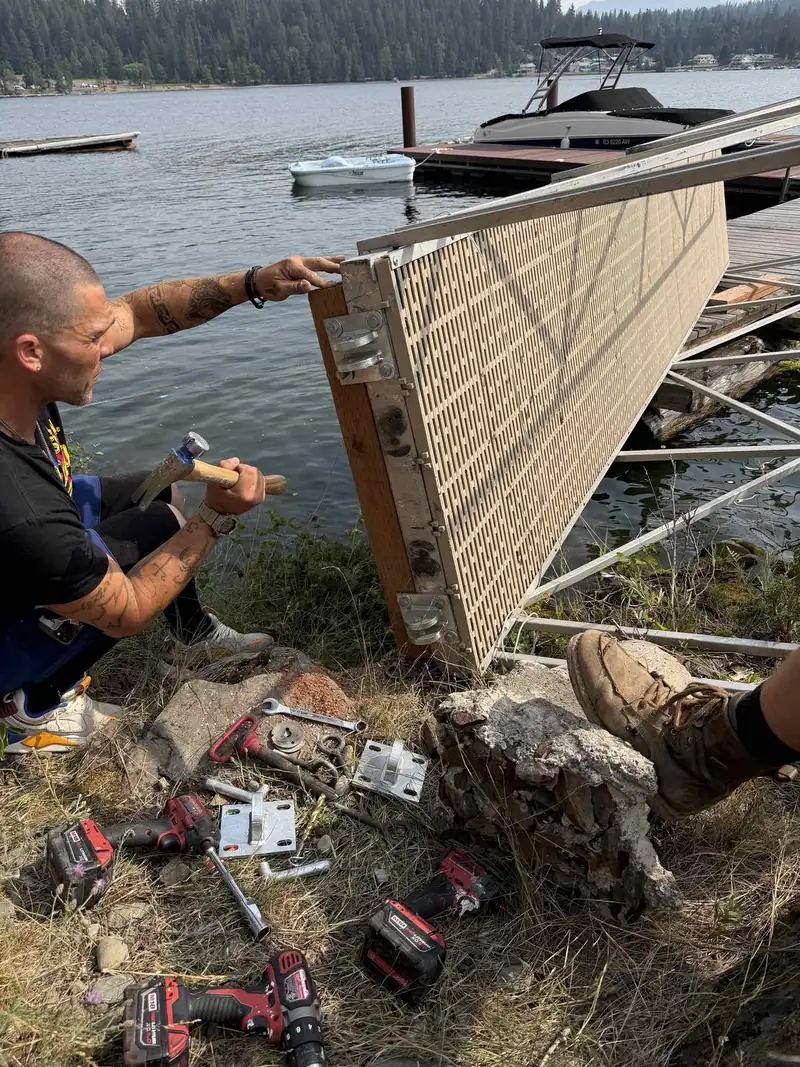
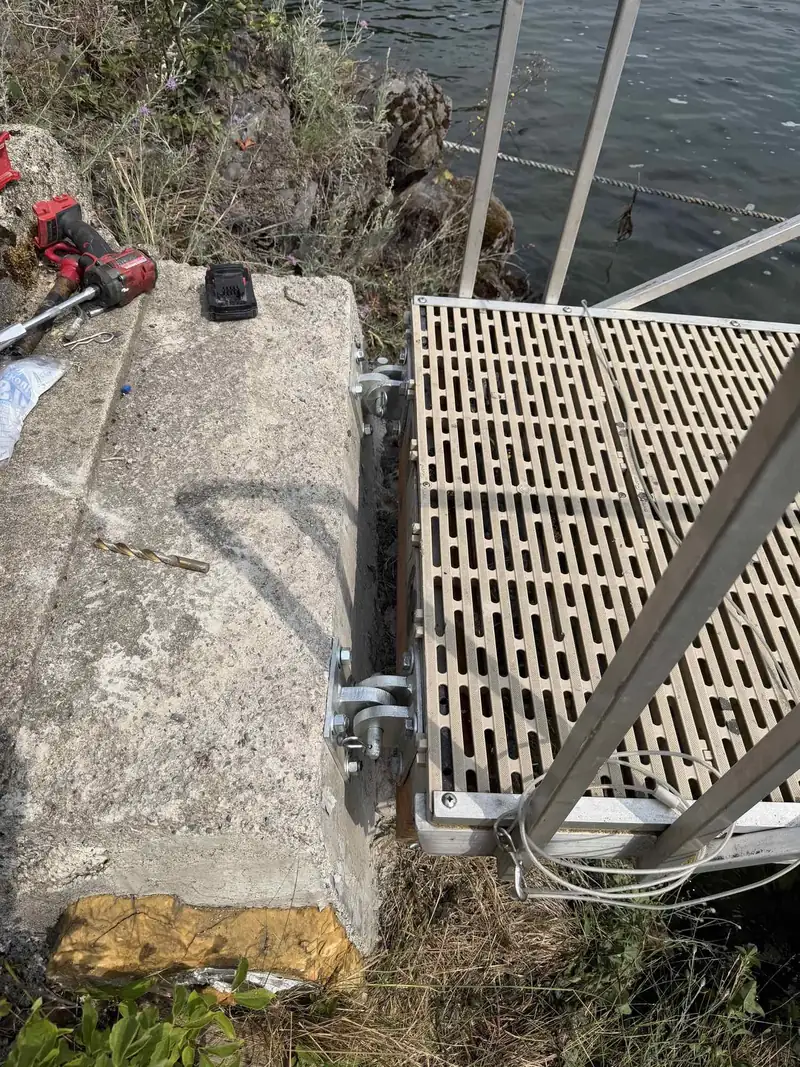
Lake Pend Oreille is hard on timber in a way inland structures never experience. A dock is wet more or less permanently, it goes through a full freeze cycle every winter, and the waterline section gets repeated wet-dry cycling that pulls fasteners loose and opens the grain.
Ice is the underrated one. Ice movement and lake level change put lateral loads on pilings and dock sections that nothing on land has to deal with, and a dock that looked solid in October can have shifted noticeably by May. That is why spring is the busiest season for this work — and why an inspection before the summer, rather than after somebody puts a foot through a board, is the right order to do things in.
Hardware is the third. Ordinary fasteners corrode fast in constant water exposure. A dock can have perfectly sound timber and still be unsafe because the connections holding it together have rusted out of the wood.
Ideally in spring, before the dock is in daily use. Tell us the location and whether there is road access.
We walk the dock, check the framing and hardware as well as the surface, and tell you what is safety-critical versus what can wait a season.
Repairs sequenced so the dock is out of use for as little time as possible.
Staining and sealing where included, so the repair lasts.
Dock work is quoted per job after a look at the structure — the surface is rarely the whole story, and pricing before seeing the framing and hardware would be guesswork. Estimates are free, including at properties we have to reach by boat.
Available in every community we serve — click through for local detail.
Yes. 7B runs a work boat specifically for waterfront and remote properties with no road access, and brings the tools and materials out with it. If getting a crew and equipment to your property has been the reason a job keeps not happening, that is the problem this solves. Mention boat access when you call.
Spring, before the season starts. Winter ice movement and lake level change are what loosen sections and shift framing, so damage shows up between October and May — and getting it fixed before the dock is in daily summer use is both safer and easier to schedule.
Boards that flex or feel soft underfoot, sections that move independently of each other, handrails you would not trust your weight on, visible rust bleeding from fasteners, and any part of the framing you can push a screwdriver into. If you are unsure, we will look at it for free.
Repair and maintenance of an existing dock is generally treated differently to building a new one or extending it. Work on the shoreline of a navigable lake can involve Idaho Department of Lands encroachment permitting. We will tell you when a job crosses that line rather than starting work that should have been permitted.
Call and describe the job, or send photos. Estimates are free and we will give you a real number rather than a range.